The Ultimate Guide
to Asset Management for Local Governments
Asset management is more than maintaining roads, pipes, and facilities. For local governments across North America, asset management is about making smart choices that protect essential services, planning responsibly for the future, and getting the best value for every dollar spent.
When a pipe bursts or a road fails, residents don’t want a report on asset data—they want to know why the assets they rely on weren’t fixed sooner. Asset management gives you the confidence and tools to answer that question clearly.
Whether you’re just starting out or looking to take your program to the next level, this guide covers the core principles behind asset management. It will also touch on how Asset Management ties into governance, long-term finances, and managing risks that come with managing public infrastructure.
Whether you’re just starting out or looking to take your program to the next level, this guide covers the core principles behind asset management. It will also touch on how Asset Management ties into governance, long-term finances, and managing risks that come with managing public infrastructure.
Want to Jump Ahead?
Table of Contents
What is Asset Management?
Municipalities are constantly being asked to do more with less, while also being expected to keep infrastructure safe, reliable, and future-ready. Asset management gives you the tools to stretch your budget, reduce surprises, and protect the services your community depends on.
At its core, asset management is how local governments make informed decisions about the assets they own such as roads, water systems, buildings, and parks — so they can continue to deliver value over time. This requires a balancing of costs, risks, and service levels to get the most from your municipality’s assets while simultaneously meeting community needs and long-term goals.
The Institute of Asset Management (IAM) defines asset management as “the balancing of costs, opportunities and risks against the desired performance of assets to achieve an organization’s objectives.” In plain terms, it involves the process of deciding what asset to fix, when to fix them, and how to pay for it — all backed by data.
In a municipal context, asset management isn’t just about ticking boxes or meeting regulations. It’s a strategic tool that supports better service delivery, smarter investments, and stronger communication with Council and the public. This also supports good governance because elected officials and senior staff are ultimately responsible for how infrastructure decisions impact residents, budgets, and the community’s resilience.
Why Does Asset Management Matter?
Asset management isn’t just a technical task, it’s a powerful tool that helps local governments plan long-term, manage finances wisely, and govern responsibly. When a municipality uses real data and focuses on risks, it can be confident that it is building a community that’s more resilient, cost-effective, and ready for the future.
Here’s how asset management makes a difference:
1. Better Capital Planning:
Asset management helps municipalities forecast future infrastructure needs and develop realistic, long-term capital plans. For example, knowing the condition and remaining life of a road network allows staff to schedule renewals before failure, reducing costly reactive repairs.
2. Smart Capital Prioritization:
Using risk scores that combine asset condition, service criticality, and likelihood of failure, local governments can identify which projects should be funded first. This ensures limited budgets are spent where they’ll have the greatest impact.
3. Cost Avoidance & Efficiency:
Shifting from reactive to proactive maintenance reduces emergency repairs and helps extend asset life. For instance, regular sewer inspections can prevent major backups, reducing both service disruption and cost.
4. Risk Management & Organizational Resilience:
Asset management helps identify and mitigate risks—like bridges at risk of failure or undersized culverts prone to flooding—before they lead to service disruptions, legal liabilities, or public safety concerns.
5. Sustainability & Long-Term Financial Impact:
By planning for lifecycle costs and funding needs over time, municipalities can reduce deferred maintenance, avoid crisis-driven spending, and ensure financial sustainability.
6. Stronger Council Communication:
One of the most valuable roles of asset management is supporting conversations with Council. With clear data on asset condition, risk, and lifecycle costs, staff can back up recommendations, justify funding requests, and help elected officials make informed, transparent decisions.
What Challenges Does Asset Management Software Help Solve?
Local governments face mounting infrastructure challenges and asset management software plays a key role in addressing them. But software is only as effective as the data behind it. That’s why asset management tools must work hand-in-hand with broader asset management programs that promote good data collection, governance, and continuous improvement.
Here’s how software helps tackle key municipal challenges:
Aging Infrastructure
Many communities are managing assets long past their intended lifespan. Asset management software helps inventory and assess these assets, so municipalities can prioritize replacements or repairs based on risk, condition, and remaining service life.
Limited Budgets
With constrained funding, every dollar counts. Software tools support evidence-based decision-making by combining condition, risk, and lifecycle data—so capital plans are focused on the highest-value projects.
Poor or Incomplete Data
Software alone isn’t the solution—municipalities also need clear processes to collect and update reliable asset data. Asset management software helps structure and standardize data collection so it can be trusted, used, and maintained over time.
Data Gaps and Silos
Without a centralized system, departments often work in isolation. Asset management software breaks down silos by creating a shared, organization-wide view of infrastructure assets—enabling better collaboration and planning.
Reactive Maintenance
Emergency repairs are costly and disruptive. With accurate asset condition data and lifecycle forecasts, software helps municipalities move toward proactive, preventative maintenance.
Climate Risks and Resilience
Infrastructure is under growing pressure from extreme weather, flooding, and temperature fluctuations. Asset management software helps assess vulnerabilities and integrate climate risk into long-term planning and prioritization.
Regulatory Compliance
Municipalities are increasingly required to report on asset condition, funding needs, and risk exposure. Asset management software streamlines data collection and reporting—supporting transparency and compliance.
Governance & Accountability
A centralized asset management system provides transparency, enabling leadership to track infrastructure performance, spending, and risk exposure in real time.
By improving data quality and turning it into actionable insights, asset management software helps municipalities make smarter infrastructure decisions that protect both budgets and community well-being.
What Makes Up an Asset Management Approach?
Asset management involves developing strategies, plans, programs, and frameworks — each serving a distinct purpose. Together, they guide municipalities from big-picture vision to day-to-day execution, enabling more informed decisions and better outcomes.
Asset Management Strategy
Think of this as your compass. The strategy sets the high-level direction for your program—outlining objectives that align with Council priorities, legislative requirements, and long-term community goals like growth, climate action, or fiscal responsibility.
Why It Matters
A strong strategy builds alignment across departments and helps secure buy-in from Council and staff. It’s where you set your intention and define what success looks like.
Asset Management Plan (AMP)
Your AMP turns your municipality’s Asset Management Strategy into a tactical game plan. It outlines how specific assets or groups of assets will be maintained, renewed, or replaced over time. Think lifecycle forecasts, risk assessments, and long-term capital needs.
Why It Matters
AMPs help you justify investments, forecast funding needs, and communicate risks and trade-offs. They’re living documents that evolve as your data improves and your priorities shift.
Asset Management Program
This is the engine behind your strategy and plan—the people, processes, tools, and culture that keep it running. It covers everything from staff roles and training to data governance, collaboration across departments, and day-to-day decision-making.
Why It Matters
Programs create accountability. They also help asset management become part of everyday operations—not just a once-a-year planning task.
Asset Management Framework
Your framework brings it all together. It includes your policies, principles, and standards (for example, ISO 55000 or O. Reg 588/17) that guides how to manage assets across departments.
Why It Matters
A good framework keeps everyone rowing in the same direction. It also helps build transparency and ensures your approach stands up to audits, Council questions, or funding requirements.
What are the Core Components of an Asset Management Framework?
A strong asset management strategy, plan, and program are supported by a clear, structured framework. Drawing from industry best practices—including EPA guidance and ISO 55000 standards—the following components form the foundation of effective municipal asset management:
Asset Inventory
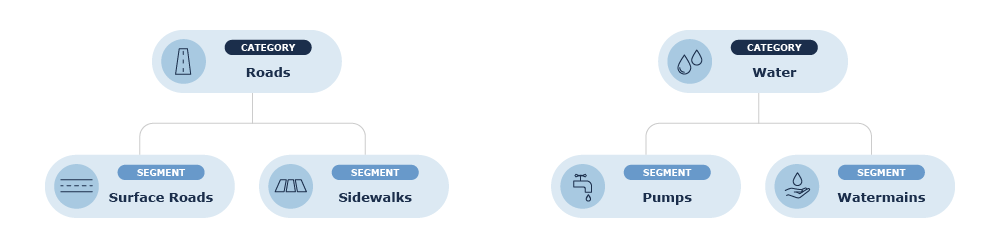
A comprehensive, up-to-date record of all municipal assets—capturing key details such as location, condition, and replacement value. Knowing exactly what you own is the first step toward making informed, strategic decisions. For example, an Asset Management Plan might break down this data into categories and segments, such as roads and water infrastructure, like the below:
Condition Assessment
Regular inspections and evaluations to understand how assets are performing, identify issues early, and plan maintenance or replacements effectively.
Levels of Service (LOS)
Documenting and defining the expected and/or desired quality of service for each asset or service area. These targets should align with community priorities, regulations, and budgets.
Lifecycle Management
Planning for each stage of an asset’s life—from acquisition and use to maintenance, renewal, or disposal. This includes estimating life-cycle costs to ensure long-term sustainability.
Risk Management
Identifying critical assets and evaluating potential risks—such as failure, service disruption, or safety concerns—to set priorities and reduce vulnerabilities.
Financial Strategy
Developing long-term budgeting and funding plans that align with asset needs and service level goals. A sustainable financial approach helps avoid costly surprises and improves transparency.
Continuous Improvement
Regularly reviewing and updating plans, processes, and data. Engaging stakeholders and encouraging cross-department collaboration ensures the asset management program evolves and remains effective over time.
By applying these asset management core components within a structured framework, municipalities can make smarter investments, extend infrastructure life, and improve accountability across the organization.
Learn From Port Coquitlam's Success
Port Coquitlam’s Asset Management Success
Port Coquitlam partnered with PSD Citywide to develop comprehensive asset management plans for key infrastructure categories. This collaboration improved their asset register, financial planning, and performance monitoring—helping the city make smarter, data-driven decisions to sustain their $1.3 billion portfolio.
Port Coquitlam is building a sustainable future.
How Do I Get Started?
Whether you’re starting from scratch or building on existing efforts, the key is to build momentum without trying to do everything at once. Focus on progress, not perfection.
Here’s how:
1. Build Organizational Awareness:
Start by explaining what asset management actually is and why it matters. Help Council and staff see how it supports their goals.
2. Assemble a Team:
Bring together staff from engineering, finance, public works, IT, and planning. Cross-department collaboration is key.
3. Start with What You Have:
Don’t wait for perfect data. Use what you’ve got—like GIS, work orders, or budget records—to start building your asset inventory and identifying data gaps.
4. Create an Asset Management Policy:
This is your commitment statement. It outlines who’s responsible, what principles guide decisions, and how you’ll report progress.
5. Develop a Roadmap:
Set clear, achievable goals. Define what success looks like in one year, three years, and beyond. Focus on building your program in manageable steps.
6. Optional: Get Support from Asset Management Advisors:
Asset management is a team sport. Work with trusted advisors like those at PSD Citywide who can help validate your approach, fill resource gaps, or keep your momentum going.
What Technology and Tools Can I Use for Asset Management?
Modern asset management depends on the right technology. Software platforms like Enterprise Asset Management (EAM) systems help municipalities centralize asset data, automate maintenance, and generate powerful reporting insights. Key features to consider include GIS integration, mobile tools for field staff, and APIs that enable data sharing across systems.
These platforms also promote integration across departments, connecting public works, finance, planning, and IT, so everyone works from the same up-to-date information.
Cloud-based solutions are especially valuable for collaboration, mobility, and scalability. They support remote access, reduce reliance on spreadsheets, and simplify updates without the need for internal servers. Many municipalities appreciate the lower IT burden and ability to scale up as their asset management program evolves.
However, for municipalities with specific security, compliance, or IT infrastructure requirements, on-premises solutions may still be the right choice. Hosted locally on municipal servers, these systems offer more control over data storage and access, but often require more internal IT resources for ongoing maintenance, upgrades, and backups.
When evaluating technology options, look for solutions that are:
Scalable and customizable to your municipality’s size and goals
Supported by knowledgeable vendors who offer training and implementation guidance
Aligned with your asset management roadmap and internal capacity
Whether you’re selecting your first system or upgrading an existing one, investing in the right tools is essential to scaling your asset management program effectively.
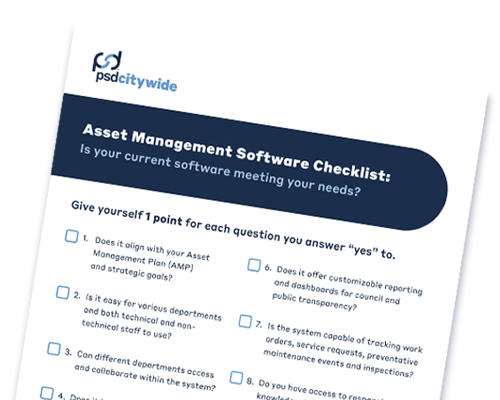
Ensure your current asset management software is living up to your expectations using this checklist.
Learn From Central Frontenac's Success
Central Frontenac’s Asset Management Journey
Read more about Central Frontenac’s asset management journey.

What Technology and Tools Can I Use for Asset Management?
A: All tangible assets that support service delivery, such as roads, pipes, buildings, vehicles, and parks, as well as natural assets like stormwater ponds or forests. Some municipalities also include digital infrastructure and equipment.
A: To gain asset management budget approval, focus on long-term cost savings, risk reduction, improved service delivery, and regulatory compliance. Providing real-world examples from other municipalities can also help.
A: No. Asset management is scalable and essential for municipalities of all sizes. Asset management for smaller communities is especially valuable, as these communities often have limited resources and must carefully prioritize investments.
A: Yes—when implemented effectively, asset management helps municipalities save money in both the short and long term. By using data to plan ahead, prioritize investments, and extend the life of assets, municipalities can avoid costly emergency repairs, reduce service disruptions, and make better use of limited budgets. It also supports smarter capital planning, helping to invest in the right projects at the right time. While there may be upfront costs, the long-term financial benefits typically outweigh them.
A: Data should be updated as often as is practical—at minimum, condition assessments should be reviewed every few years, or when there’s a significant change (e.g., after a capital project or major storm).
A: Levels of Service define the quality and performance expected from municipal services. It helps local governments understand community priorities and manage resources accordingly.
A: Yes. In Canada, federal programs like the FCM Municipal Asset Management Program (MAMP) offer grants. In the U.S., funding may be available through state programs, infrastructure bills, or federal sources like the EPA or DOT. Canadian municipalities can also take advantage of PSD Citywide’s Municipal Grant Services for support in identifying and applying for relevant funding opportunities.
A: Define your goals and key requirements—such as mobile access, GIS integration, and reporting. As you evaluate your asset management software considerations, involve end users in the selection process, think about scalability and long-term needs, and choose a vendor with municipal experience.
A: Not necessarily. While having a dedicated asset manager can help coordinate efforts, many municipalities integrate asset management using existing staff across departments like public works, finance, or IT. Success depends more on clear roles, good processes, and collaboration than on specific job titles.
A: While often used together, GIS and asset management serve different purposes. GIS (Geographic Information Systems) is a tool used to map and analyze the location of assets like roads, water pipes, and buildings. Asset management is a broader strategy focused on maximizing asset performance, managing lifecycle costs, and meeting service goals. GIS supports asset management by providing the spatial data needed for informed planning, risk assessment, budgeting, and decision-making.
A: Enterprise Asset Management refers to software systems that help organizations manage assets across departments and throughout their lifecycle—from acquisition to disposal. EAM platforms centralize data, support preventive maintenance, and offer advanced reporting tools. Local governments benefit most from EAM when they want to improve coordination, streamline workflows, and gain better visibility into long-term asset needs.
A: Asset management provides the strategic foundation for long-term infrastructure planning, while maintenance management focuses on daily upkeep and repairs. Together, they help municipalities extend asset life, prevent failures, and use resources more efficiently. By using maintenance data to inform levels of service, municipalities can align service goals with actual asset performance, condition, and criticality. This approach supports more accurate planning, prioritization, and investment decisions.
A: Implementing asset management software typically begins with a discovery phase to understand your organization’s needs, existing data, and workflows. This is followed by data migration, system configuration, and, if needed, integration with other tools like GIS or financial software. Training for staff is essential to ensure adoption, and some vendors provide ongoing support to help refine processes and optimize use over time. A phased approach often works best, starting with core functions and expanding as your team builds capacity.
Key Takeaways
Asset management isn’t a one-and-done project, rather it’s a continuous practice that brings clarity, strategy, and resilience to your municipality’s infrastructure. Whether you’re just getting started or have been at it for years, the important thing is to keep moving forward, stay informed, and get your team and community involved along the way.
With the right tools, knowledge, and commitment, your municipality can make smarter decisions, extend the life of your assets, and deliver better results for your residents.