Every organization runs on a unique mix of systems for finance, asset management, permitting, and civic engagement. At PSD Citywide, we believe these systems work best when they work together.
Our Integrations
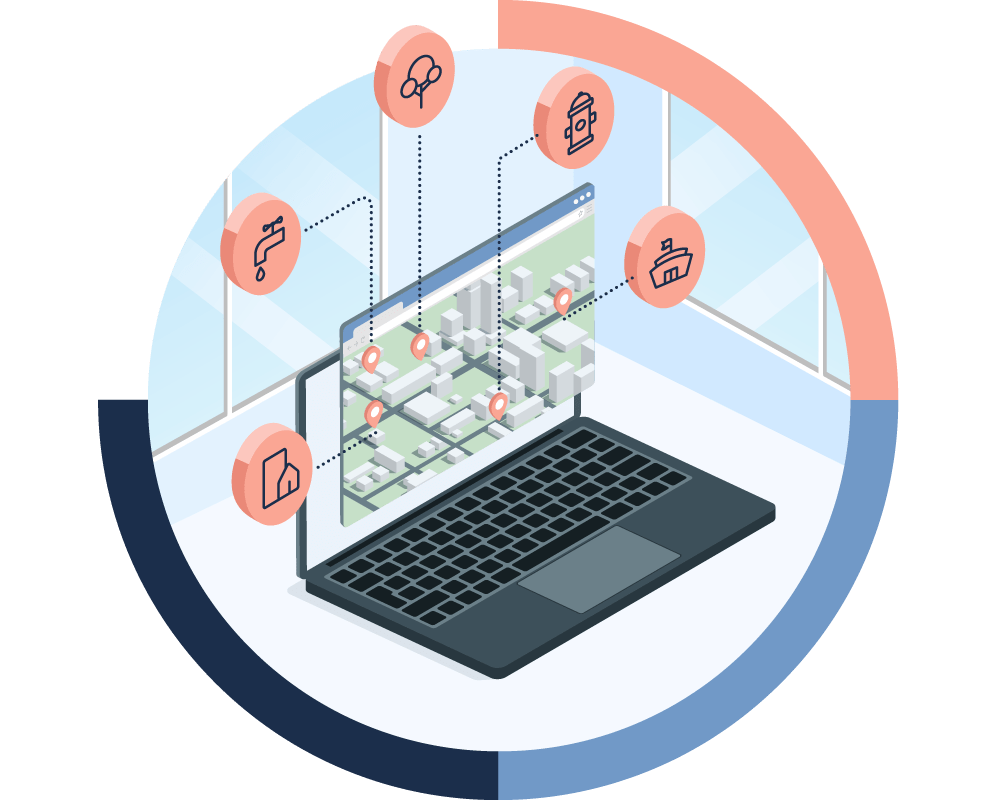
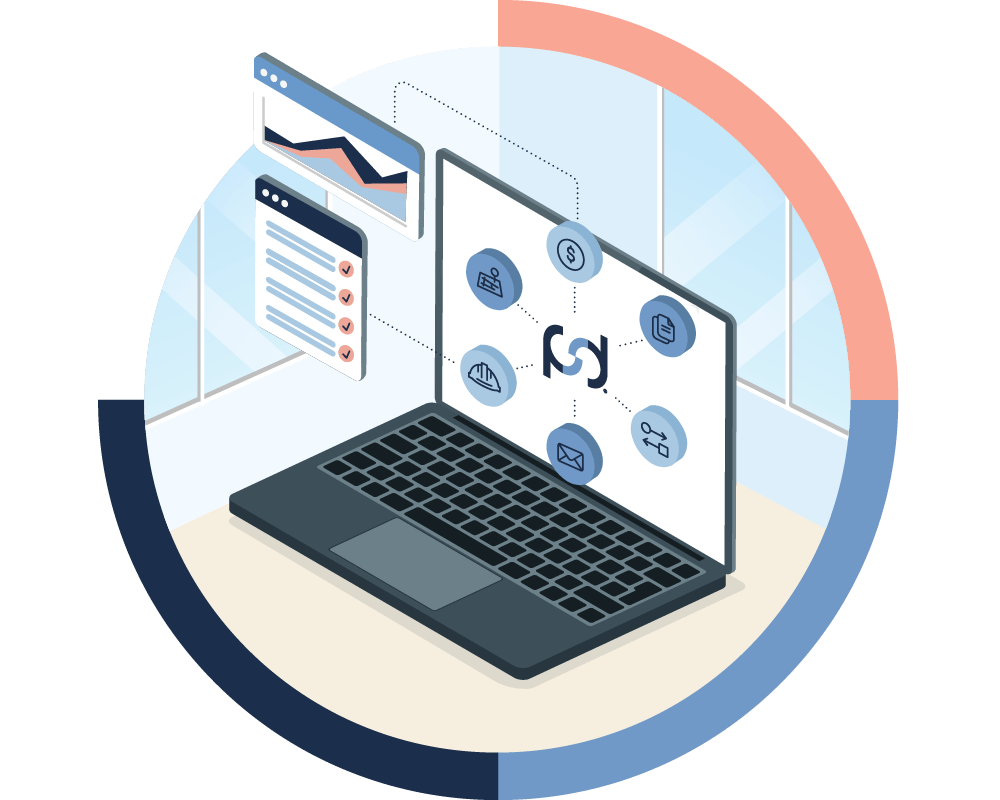
The Citywide Platform is designed with an API-first foundation, so our software can connect, communicate, and share data with the tools your teams use every day. By breaking down data silos and automating information exchange, we help organizations operate more efficiently and make better decisions with unified, accurate data. Explore the connections that power smarter, more efficient teams today.
For Ontario clients, PSD Citywide offers both manual and API-enabled submission options to the Municipal Property Assessment Corporation (MPAC). Municipal staff can either export a built-in, preformatted report or use a direct “Submit to MPAC” button to send building permit data instantly. This integration eliminates repetitive uploads and ensures accurate, timely reporting.
Connect fleet vehicle data from Geotab directly into the Citywide Platform. Through a secure API, mileage and usage data are transferred for use in preventive maintenance scheduling and asset tracking, helping organizations plan servicing with precision and reduce downtime.
PSD Citywide integrates with various 811 Request solutions. This integration allows the creation of work orders in the Citywide Platform automatically. The integration reduces emails, improves compliance tracking, and ensures field crews stay informed in real time.
For U.S. municipalities using SeeClickFix for 311 service requests, this integration allows issues reported by citizens to be created and updated automatically within the Citywide Platform. Changes made in either platform are reflected across both systems, maintaining transparency and keeping departments aligned on public service responses.
Our integration with CityRover enhances route management and field responses. Routes or requests from CityRover automatically create service requests or work orders in the Citywide Platform, mapped by external IDs for accuracy. When a task is completed, Citywide software sends real-time data back to CityRover, ensuring both systems stay up-to-date.
The Citywide Platform connects with industry-leading payment systems to streamline online transactions for permits, licenses, and applications. Once a citizen makes a payment, the gateway uses an API to automatically update the Citywide Platform, marking the request as paid and triggering the next step for processing or permit issuance.
PSD Citywide’s Open API Approach
Citywide’s open API gives organizations the flexibility to integrate our platform with virtually any third-party application. Through secure API routes, clients can push or pull data between systems to automate workflows, keep records synchronized, and reduce manual work.
The API supports both one-way and two-way data exchanges for continuous updates, while IPaaS (Integration Platform as a Service) tools like FME Flow, Zapier, or MuleSoft can handle more complex integrations. Whether you’re connecting existing applications or building new workflows, the Citywide API ensures your data stays connected, consistent, and accessible.
A Platform Built for Integration
PSD Citywide’s Integration Center and Upload & Export tools offer a range of options, from on-demand data uploads to fully automated API workflows. Whether you need direct API connectivity or a simple import/export process, our integration framework ensures all organizations can share information easily, without relying on manual data entry or custom development.
How Peterborough County Unified Systems with Citywide API
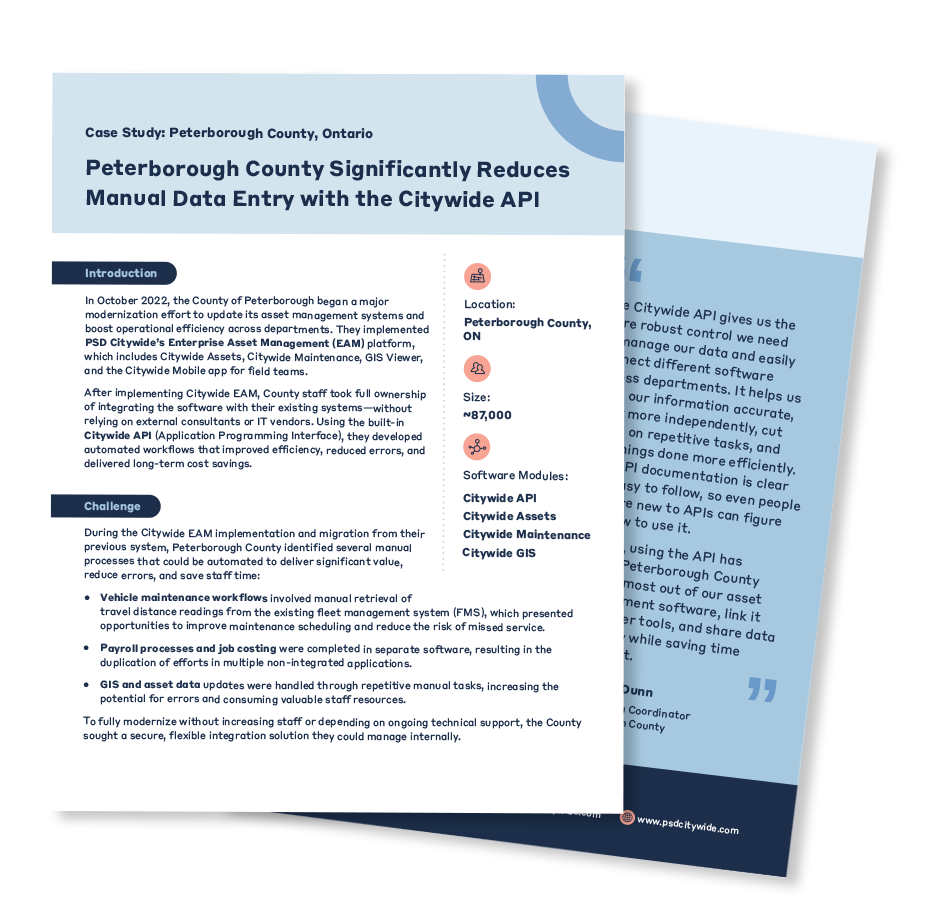
The County of Peterborough used the Citywide API to integrate asset management, maintenance tracking, GIS mapping, and mobile workforce tools into a unified workflow. This helped them eliminate manual data entry across disconnected systems and delivered measurable efficiency gains for public works operations.
Unify your municipal operations with PSD Citywide’s seamless integrations. Whether you need to connect fleet tracking, payment gateways, citizen portals, or custom applications—our API-first platform makes it simple.
Fill out the form below to access our Asset Management brochure.