
Case Study: Huntsville, ON
How Huntsville Turned Route Patrol Logs Into Legal Protection
Table of Contents
Overview
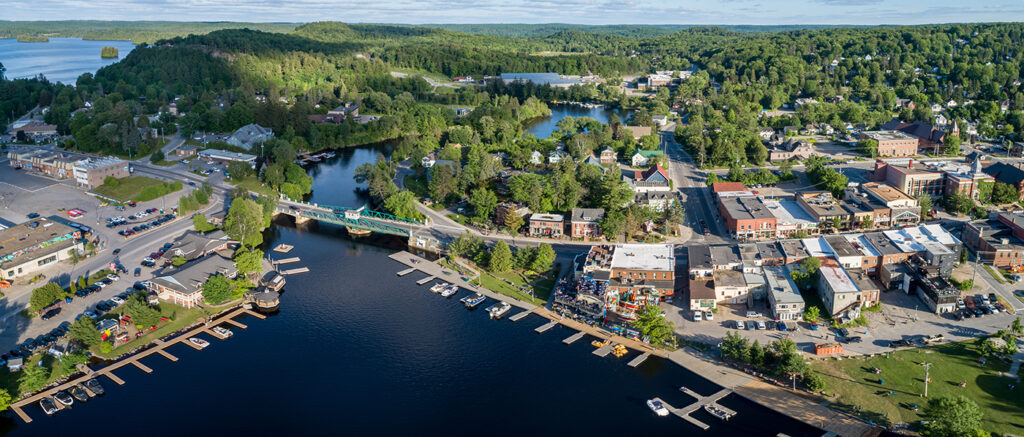
The Town of Huntsville sits in the heart of Muskoka, nestled between Arrowhead and Algonquin Provincial Parks and surrounded by lakes, trails, and vibrant arts and culture. As the largest community in Muskoka, it pairs year‑round outdoor recreation with a welcoming small‑town feel, drawing visitors to beaches, playgrounds, and scenic routes while supporting a busy local roads and parks network.
The town’s 20 roads staff, 3 mechanics, and 11 parks staff maintain 400 km of roads, 30 km of sidewalks, 33 parks and sports fields, and 6 active cemeteries — keeping this “adventure capital” accessible and safe in every season.
Introduction
For years, Huntsville’s Roads, Fleet and Parks operations ran on paper. Staff handwrote timesheets and operating data in notebooks, then entered them into spreadsheets and payroll systems later. The town set out to replace that process with municipal maintenance software, connecting work orders directly to asset management and GIS with three goals in mind:
- 1. Accurate operational data
- 2. Greater efficiency
- 3. Stronger documentation to support MMS compliance and risk management
The software also needed to align daily route patrols and winter maintenance with MMS standards across both roads and sidewalks.
Challenge
Reporting was slow and error-prone: Staff manually compiled hours, equipment, and materials from paper records every pay period. Auditing union call-outs, which require verified minimum hours, was especially tedious.
Risk documentation was thin: Huntsville's winters are rough, and slip-and-fall claims tied to sidewalk conditions were a real exposure. Before GPS and Citywide Route Patrol, the Risk Management Coordinator had only operator notebooks to show sanding, salting, and patrol activity — and notebooks don't hold up well in court.
Solution
To address these challenges, Huntsville implemented Citywide Maintenance and Citywide Route Patrol, supported by a train-the-trainer approach and PSD Citywide-led training sessions for the Roads, Fleet and Parks departments.
- They fixed the hardware problem first: An earlier rollout attempt a few years prior stalled because crews didn’t have devices. This time, dedicated phones were provided for full-time staff, shop-mounted tablets for seasonal workers, in-vehicle chargers and hands-free mounts, and cell boosters to close coverage gaps across Huntsville’s large geography.
- Mobile check-ins replaced paper timesheets: Roads, Fleet and Parks staff now receive work orders and check in through the mobile app, logging hours, equipment, and materials as they go. That check-in doubles as the official timesheet: Maintenance reports export straight to their third-party payroll system at the end of each pay period, eliminating double entry and tying work order data directly to GL accounts.
- Citywide Route Patrol, a route patrol software module, went to work every day: The Roads department runs five patrol routes, auto-scheduled by road class to meet MMS frequency requirements. The Parks department runs four sidewalk routes, with winter patrols seven days a week during that season. Operators flag plow and sanding status in real time, creating a time-stamped record. The Risk Management Coordinator pairs that data with in-vehicle GPS to demonstrate MMS compliance on claims.
- Workflows expanded beyond roads and sidewalks. Huntsville now runs Joint Health and Safety Committee (JHSC) safety inspections, Fleet annual safety inspections, and Parks tasks like grass cutting and routine inspections through the same system.

Result
Reporting that used to take hours now takes minutes. Huntsville runs period-based reports directly in Citywide Maintenance, filtered by worker, GL code, equipment, asset, or cost center and exports them on demand. Labor and equipment costing is now tracked across the Roads, Fleet and Parks departments, supporting better budgeting and cost recovery.
“It took hours every month to do all this. But now I can just run a report in PSD Citywide, select by period, and easily sort the data. It saves hours of manual time entry each month.”
– Pam Barager, Operations Coordinator, Town of Huntsville
“The Parks team has embraced the system and has no issues using it whatsoever. They’ve actually been asking the Administrative staff for new processes to add to their work orders.”
Citywide Route Patrol has been the biggest win for the Roads department. Instead of notebooks, the Risk Management Coordinator now points to GPS-backed patrol frequency, plow activity, and sanding records to support slip-and-fall and road condition claims. Huntsville is exploring auto-approved deficiencies next, to speed up patching work orders generated from patrol findings.
Conclusion
Huntsville’s experience shows what’s possible even in a multi-department environment: reporting that used to take hours now takes minutes, and route patrol data holds up as real legal documentation.
For municipalities still running Roads, Fleet and Parks departments on paper, the playbook is straightforward: fix the hardware problem first, train in phases, and let early wins with easy-adopter departments build momentum for the rest.
“Electronic work orders have made tracking maintenance, time entry and repairs much simpler, with real-time access to records and fewer paper copies to manage”
