As local governments modernize operations, real-time data sharing and system integration are no longer luxuries—they’re essential features of effective municipal government software. That’s where the Citywide API (Application Programming Interface) comes in.
Designed to streamline how municipalities manage asset data, the API connects systems across departments, reduces manual work, and supports faster, more informed decision-making.
What is the Citywide API?
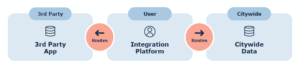
The Citywide API helps different municipal software systems work together by allowing them to securely share and update information within the Citywide platform. This enables data to flow automatically between tools your staff already use—like GIS, fleet management, and payroll—with no need for manual data entry.
Think of an API (short for Application Programming Interface) as a digital messenger. It lets two different software systems “talk” to each other, even if they weren’t originally designed to connect. Instead of having staff retype the same information into different systems, the API passes the data along automatically—quickly, accurately, and behind the scenes.
So instead of entering the same information in multiple places, data stays synced across systems in real time. That means staff always have access to the most accurate, up-to-date information—no delays, no guesswork.
How It Works
You don’t need to be a technical expert to understand how the Citywide API helps. Think of it as both a translator and a traffic controller that keeps your systems aligned and your data flowing.
Municipal departments typically rely on specialized tools:
- Fleet management systems track vehicle usage
- GIS platforms map infrastructure
- HR systems handle payroll and time tracking
On their own, these systems don’t naturally share information. The API makes those connections possible.
Once connected, these tools can automatically send and receive data from the Citywide platform. For example:
- Fleet management systems send odometer readings to Citywide Maintenance to trigger preventative work orders
- HR systems pull timesheets from Citywide Maintenance to support payroll processing
- GIS platforms update maps using the latest asset data from Citywide Assets
These updates happen behind the scenes—securely, quickly, and without manual input. You stay in control of what systems connect, what data is shared, and who has access.
Bonus Use Case
Clarington, ON uses the API to monitor daily asset changes. A Microsoft Teams channel posts a daily summary of new, updated, or deleted assets in Citywide Assets—automatically generated via the GIS integration. These reports offer a quick snapshot and are backed by log files that help staff verify when changes occurred.
In short: the Citywide API keeps your systems talking—so your teams stay aligned, your data stays accurate, and your operations run more smoothly.
Key Benefits of the Citywide API
By connecting systems and automating data exchanges, the Citywide API helps local governments work more efficiently and make better decisions with less effort.
- Periodic Data Sharing and Updates: Systems reflect the most current data—no waiting on manual imports or batch updates. Users can configure how frequently data is shared or updated through the API, ensuring information stays accurate and timely.
- Secure and Controlled Access: Uses API keys (like passwords) to ensure only authorized users and systems can access or modify data—protecting data security and integrity. Access can also be restricted to a single machine using IP address filtering for an added layer of control.
- Improved Cross-Departmental Integration: Enables platforms like GIS, finance, and work orders to work together—reducing silos and enhancing collaboration.
- Greater Operational Efficiency: Cuts down time spent on redundant manual processes and data correction, freeing staff for higher-value work.
- Scalable for the Future: Supports flexible integration needs as local governments adopt new technologies or expand service areas.
Challenges the Citywide API Solves
The API is purpose-built to tackle some of the most common integration challenges local governments face:
- Data Duplication and Inconsistency: When multiple systems are used together, keeping records consistent can be tough. The API eliminates duplicate entry by syncing systems automatically—ensuring one version of truth.
- Time-Consuming Manual Processes: Without integration, staff often spend hours copying data between systems or reconciling reports. The API automates these exchanges, improving accuracy and freeing up valuable staff time.
- Lack of Real-Time Visibility: When data updates are delayed or siloed, decision-makers can’t get a clear, up-to-date picture of asset conditions or work progress. The API supports real-time access to accurate information, improving planning and response time.
- Disjointed Systems: Municipal IT environments often include a patchwork of disconnected systems. The Citywide API helps unify these systems by enabling secure communication—creating a more connected digital ecosystem.
- Difficulty Scaling Digital Initiatives: As municipalities adopt smart infrastructure, open data, and mobile tools, integration is essential. The API offers a flexible foundation that enables new technology adoption without overhauling existing data systems.
Real-World Results: Peterborough County
Peterborough County used the Citywide API to seamlessly integrate its asset management system with key third-party tools—boosting both efficiency and service quality.
By connecting with their fleet, HR, and GIS systems, they were able to:
- Automate vehicle maintenance scheduling
- Enable HR staff to run payroll exports independently
- Improve accuracy of GIS and inspection data
- Eliminate manual and duplicate data entry
- Realize measurable time and cost savings
The API enabled Peterborough to maintain a single, reliable source of data—while still using the platforms that work best for their teams.
Read the full case study to learn how the Citywide API can support smarter asset management in your community.
About PSD Citywide — and How to Get Started
PSD Citywide partners with local governments across North America to deliver innovative municipal government software and expert support that helps communities plan, manage, and maintain infrastructure.
The Citywide API is just one of many ways we help local governments simplify their tech ecosystems, automate updates, and power smarter decisions.Ready to reduce manual work, improve accuracy, and connect your systems? Let’s talk about how the Citywide API can power your next step forward.